
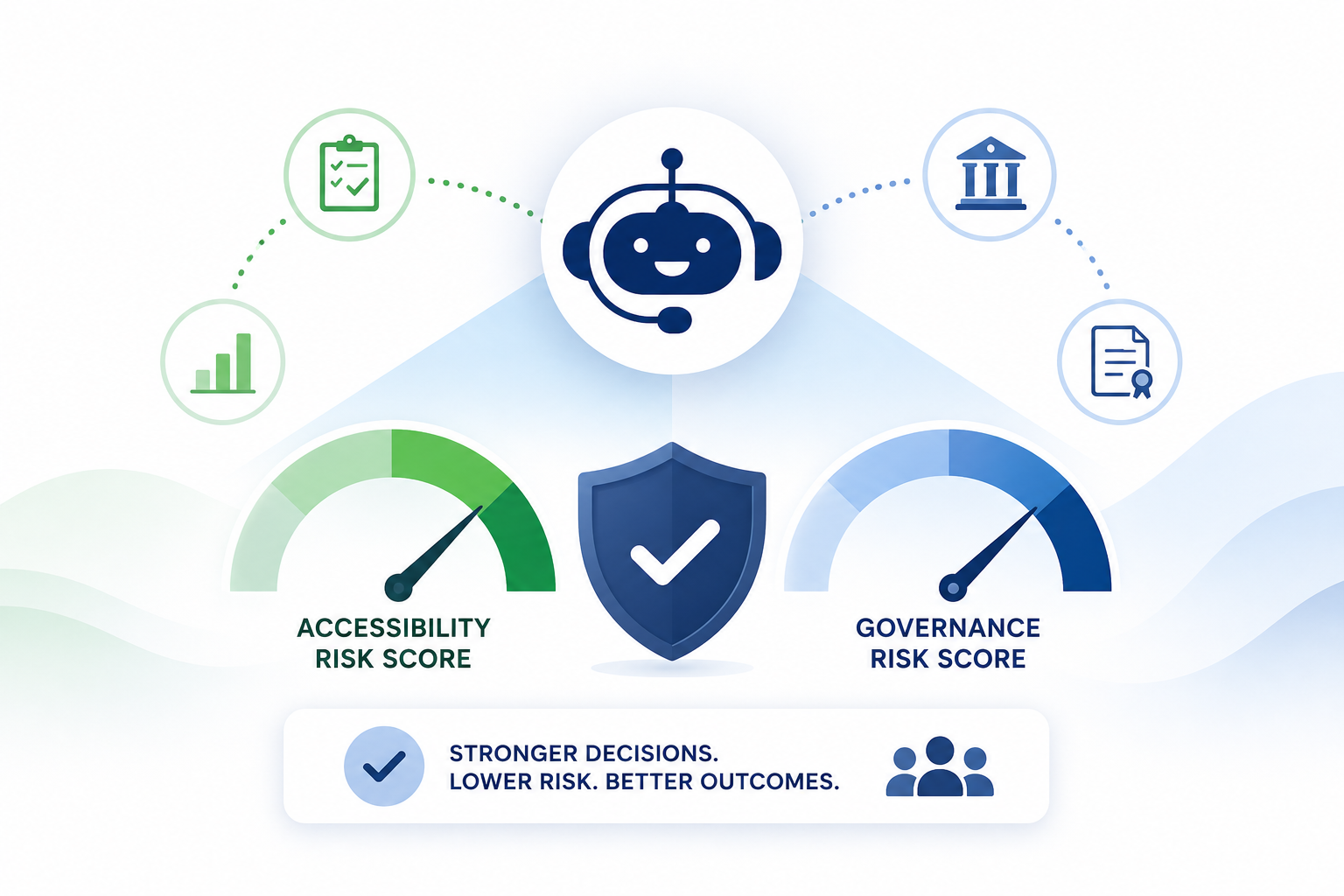
Accessibility requirements tell organizations what applies to an ICT product. Risk scoring helps determine what those requirements mean for procurement, oversight, and long-term accessibility governance.
This white paper explains the ACR Evaluator’s two-score risk model for accessibility procurement decisions:
The paper explains how these scores work together to support a lifecycle-aware procurement recommendation. It also describes how the ACR Evaluator uses structured scoring, evidence confidence, and stage-aware weighting to help organizations make more defensible ICT decisions.
Key topics covered include:
The white paper also introduces the Evidence Confidence Score (ECS), which signals how reliable the supporting documentation is. A low ECS can prevent an unconditional “proceed” or “renew” recommendation, even when the governance score appears favorable.
The central takeaway is that accessibility conformance and accessibility governance must be evaluated together. A product with fewer reported issues may still carry high procurement risk if the evidence is weak, the ACR is outdated, remediation commitments are unclear, or contract controls are missing.
By separating product risk, governance risk, and evidence confidence, the ACR Evaluator helps agencies evaluate ICT products with greater consistency, transparency, and traceability across procurement, acceptance, renewal, and portfolio review decisions.